

How to Monitor Brand Mentions in AI Search Results
Most brand monitoring stops at social media and news. But millions of people now ask AI assistants for product recommendations, and your brand may or may not show up in those answers. This guide covers how to monitor brand mentions across ChatGPT, Claude, Gemini, Perplexity, and other AI platforms, with a practical measurement framework you can set up this week.

Why Social Media Monitoring Misses the Biggest Shift in Search
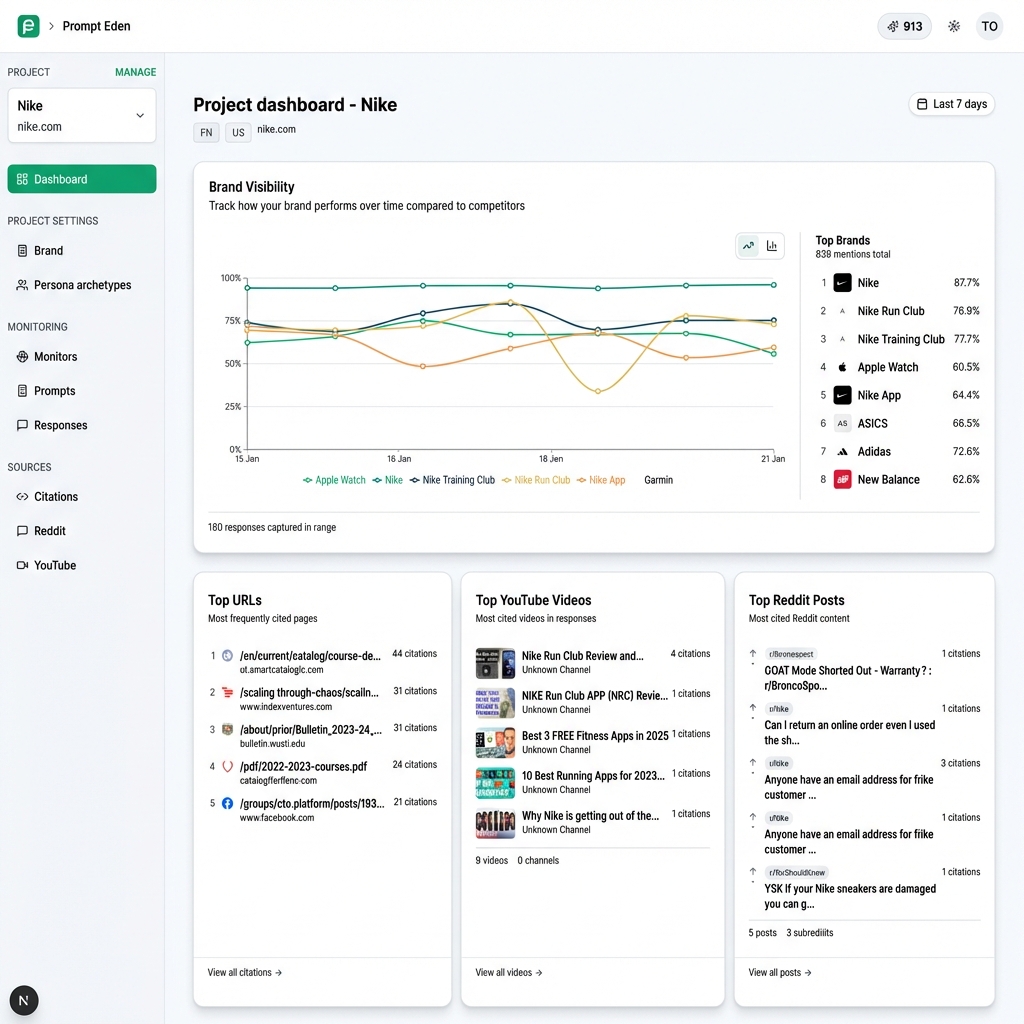
Brand monitoring, as most teams practice it, tracks mentions on social media, review sites, and news outlets. That made sense when those were the primary places people discovered and evaluated brands. But buyer behavior has changed fast. According to Gartner, traditional search engine volume is expected to drop 25% by 2026 as AI chatbots and virtual agents replace conventional queries. ChatGPT alone now has over 800 million weekly active users. When someone asks ChatGPT "What's the best project management tool for remote teams?" or tells Claude "Compare CRM options for small businesses," the AI generates an answer that may or may not include your brand. These AI-generated answers have become a discovery channel, and most monitoring tools ignore them completely. AI brand monitoring is the practice of tracking when and how AI platforms mention, describe, rank, and recommend your brand in their generated responses. It differs from traditional brand monitoring in three ways:
- No fixed index to crawl. AI responses are generated on the fly. The same prompt can produce different answers across models, and even the same model may change its response over time. - Multiple models, multiple opinions. ChatGPT might recommend your brand while Gemini leaves it out entirely. Each model draws on different training data and retrieval sources. - Context shapes visibility. How a user phrases their question affects whether your brand appears. "Best budget CRM" and "top enterprise CRM" will surface different brands from the same AI. Traditional tools like Mention, Brandwatch, or Google Alerts were not built for this. They monitor published content across the web. AI brand monitoring requires querying the models directly, capturing their responses, and analyzing the results over time.
What AI Brand Monitoring Actually Measures
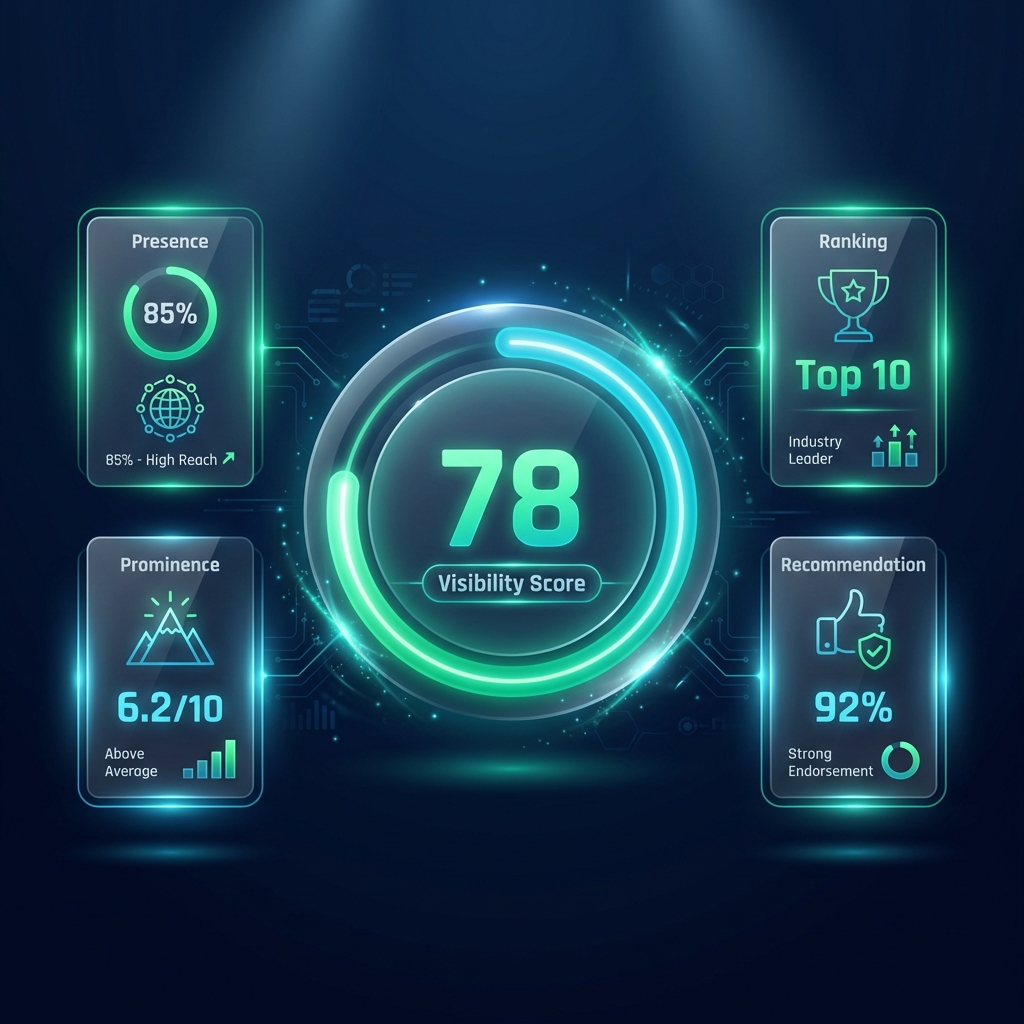
AI brand monitoring tracks four distinct dimensions of how your brand appears in AI-generated answers. Understanding these dimensions helps you move beyond simple "mentioned or not" tracking toward a measurement framework that drives action. ### Presence: Does AI Know You Exist? The most basic question is whether AI platforms mention your brand at all when users ask relevant questions. A brand with zero presence in AI answers is invisible to a growing share of potential buyers. Presence tracking monitors a set of prompts across multiple AI platforms and records whether your brand name appears in each response. ### Prominence: How Featured Are You? Being mentioned is not the same as being featured. If an AI response lists ten competitors and your brand appears as a brief afterthought at the bottom, that is very different from being described in detail at the top of the answer. Prominence measures how much attention the AI gives your brand relative to the response as a whole. ### Ranking: Where Do You Appear in Lists? When AI platforms generate ranked lists or recommendations, position matters. Appearing first in a ranked list of email marketing tools carries more weight than appearing last. Ranking tracks your position in ordered recommendations and how that position shifts over time. ### Recommendation: Does AI Actively Endorse You? The strongest signal is when an AI platform explicitly recommends your brand. There is a difference between "Brand X is one option" and "We recommend Brand X for teams that need..." Recommendation tracking captures whether the AI positions your brand as a suggested choice, not just a known entity. PromptEden combines these four components into a single Visibility Score from 0 to 100, giving you a composite metric that reflects your overall AI brand visibility. Each component contributes to the score, so you can identify exactly where you are strong and where you are falling behind competitors.
The Measurement Framework: Metrics That Matter
Knowing what to measure is one thing. Building a repeatable measurement framework is another. Here is a practical approach to tracking AI brand mentions that goes beyond vanity metrics and produces data you can act on. ### Define Your Prompt Set
Start by identifying the questions your target audience asks AI assistants. These fall into three categories:
- Brand queries: "What is [Your Brand]?" or "Tell me about [Your Brand]." These test whether AI has accurate information about you. - Category queries: "Best [product category] tools" or "Top [solution type] for [use case]." These test whether AI includes you in competitive sets. - Comparison queries: "[Your Brand] vs [Competitor]" or "Compare [Your Brand] and [Competitor]." These test how AI positions you head-to-head. PromptEden lets you track between 10 and 400 prompts depending on your plan, with the Free tier covering 10 prompts and the Business plan supporting up to 400. Start with a focused set of prompts that cover your core brand, category, and comparison queries, then expand as you learn which prompt types reveal the most useful data. ### Choose Your Model Coverage
Not all AI platforms treat your brand the same way. A brand might score well on ChatGPT but be completely absent from Gemini or Perplexity. PromptEden monitors 9 AI platforms including ChatGPT, Claude, Gemini, Perplexity, Google AI Overviews, and more. Monitoring multiple models matters because your audience does not all use the same AI tool. Each model draws from different data sources and applies different ranking logic. ### Track Citations, Not Just Mentions
AI platforms increasingly cite sources when generating answers. Knowing which websites an AI model references when discussing your brand, or your competitor's brand, tells you something actionable. If Perplexity cites your competitor's blog but not yours when answering category queries, that is a content gap you can close. Citation Intelligence tracks which websites AI cites about your brand, compares those sources against competitors, and identifies gaps where you are missing coverage. This moves AI monitoring from passive observation to active optimization. ### Evidence and Benchmarks: What the Data Shows
According to research from DemandSage, ChatGPT's weekly active users doubled from 400 million to 800 million between February and late 2025. That growth means the volume of AI-generated brand mentions is increasing rapidly, and the brands that track these mentions early will have a significant data advantage. The pattern is similar to early SEO monitoring. Teams that started tracking search rankings early had years of competitive data by the time their competitors caught on. AI brand monitoring is at that same inflection point now. ### Set Your Monitoring Cadence
How often you refresh your data depends on how fast your market moves. PromptEden offers different refresh intervals by plan:
- Free: Weekly refresh, good for initial baseline measurement
- Starter ($49/month): Daily refresh with 100 prompts, suitable for active monitoring
- Pro ($129/month): Daily refresh with 150 prompts and API access for custom dashboards
- Business ($349/month): Refresh every 3 hours with 400 prompts, built for teams that need near-real-time data
For most brands getting started, daily monitoring captures meaningful changes without overwhelming you with noise. Weekly monitoring works for establishing your initial baseline and understanding the landscape before committing to a more active cadence.
Step-by-Step Setup Guide
Here is how to go from zero to a working AI brand monitoring setup. This process takes less than an hour for the initial configuration, and then runs automatically on your chosen refresh schedule. ### Step 1: Create Your Brand Monitor
Sign up at PromptEden and create your first project. Enter your brand name, website URL, and a short description of what your brand does. This description helps the system understand your brand context when analyzing AI responses. ### Step 2: Build Your Prompt Library
Add the prompts you want to track. Use the AI Query Generator to brainstorm relevant prompts if you are not sure where to start. A strong initial prompt set includes:
- 3-5 brand awareness prompts: Direct questions about your brand
- 5-10 category prompts: Questions about your product category without naming any specific brand
- 3-5 comparison prompts: Head-to-head questions against your top competitors
Write prompts the way real users talk to AI. Conversational phrasing ("What's the best tool for...") tends to produce different results than formal phrasing ("Recommend enterprise solutions for..."). Include both styles. ### Step 3: Select Your AI Platforms
Choose which AI models to monitor. If you are just starting, prioritize the platforms your audience is most likely to use. For B2B brands, ChatGPT and Perplexity tend to be highest priority. For consumer brands, add Gemini and Google AI Overviews. Monitoring all available platforms gives you the broadest view, but even tracking a handful of major models reveals useful patterns. ### Step 4: Review Your First Results
After your first monitoring cycle completes, review your Visibility Score and drill into each component. Common patterns in first-time results:
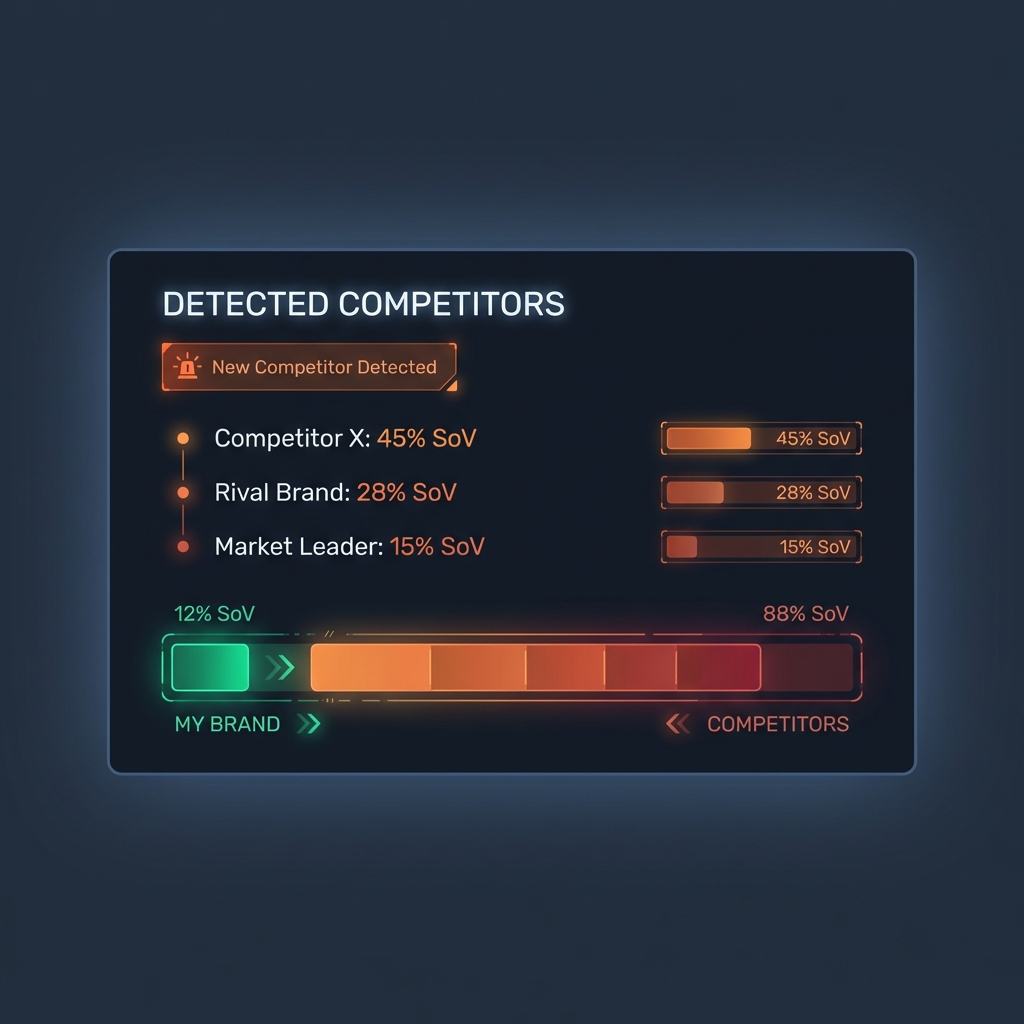
- High Presence, Low Recommendation: AI knows about you but does not actively suggest you. This often means your online content describes what you do but does not position you as a recommended choice. - Strong on one model, weak on others: Each AI platform has different training data and retrieval sources. If you are visible on ChatGPT but not Gemini, investigate what content sources each model relies on. - Competitors appearing that you did not expect: PromptEden's Organic Brand Detection automatically surfaces competitor brands that appear in AI responses to your tracked prompts, even brands you did not think to monitor. ### Step 5: Set Up Alerts and Reporting
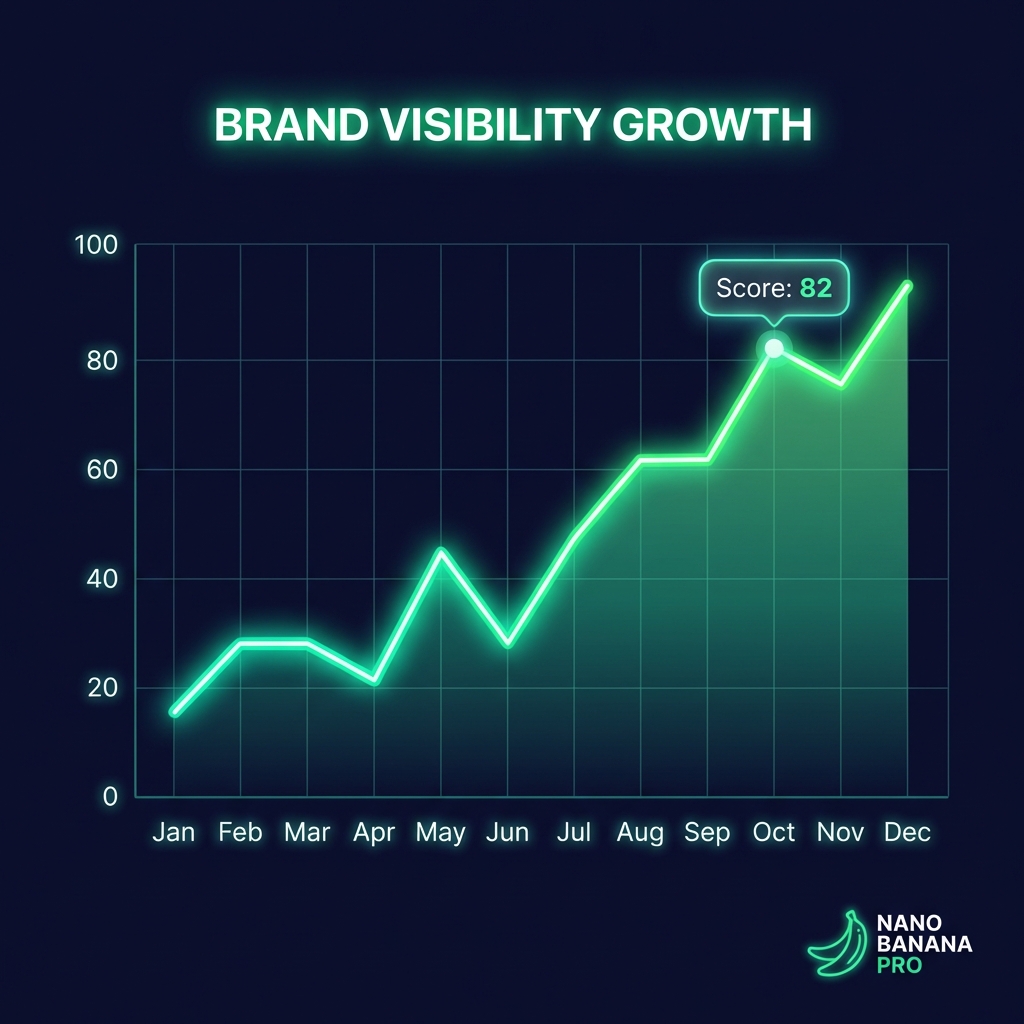
Configure alerts for significant changes in your Visibility Score or when new competitors are detected. The trend analysis features let you track movement over time, which is more valuable than any single snapshot. AI responses change as models update their training data and retrieval behavior, so ongoing monitoring catches shifts that a one-time audit would miss.
Common Mistakes and How to Avoid Them
After working with teams that monitor AI brand mentions, a few recurring mistakes stand out. Avoiding these will save you time and produce more useful data. ### Monitoring Too Few Prompts
Ten prompts might feel like enough, but AI responses vary significantly based on how questions are phrased. "Best CRM for startups" and "CRM recommendations for small businesses" might produce completely different brand lists from the same AI model. Broader prompt coverage gives you a more accurate picture of your visibility. If budget allows, the Starter plan's 100 prompts or the Pro plan's 150 prompts provide meaningfully better coverage than the minimum. ### Ignoring Model Differences
Checking only ChatGPT and assuming other models give similar answers is a common blind spot. Each AI platform uses different retrieval mechanisms and training data. A brand that ranks first on ChatGPT might not appear at all on Claude or Gemini. Monitor several major platforms to understand your true cross-model visibility. ### Treating AI Monitoring as a One-Time Audit
AI model responses change. Models get updated, retrieval sources shift, and competitor content evolves. A one-time audit gives you a snapshot, but ongoing monitoring reveals trends. The teams that get the most value from AI brand monitoring are the ones that track changes week over week and respond to shifts quickly. ### Forgetting About Citations
Mentions matter, but citations drive lasting visibility. When an AI model cites a specific webpage as its source for a recommendation, that source has influence over future responses too. Tracking which sites AI models cite, and working to become one of those cited sources, is a longer-term strategy that compounds over time. ### Not Connecting AI Monitoring to Content Strategy
AI brand monitoring produces the most value when it feeds back into your content strategy. If AI models are not mentioning your brand for certain queries, the question becomes: what content would you need to create or improve so that AI models have a reason to reference you? The monitoring data tells you where the gaps are. Your content team closes them. You can also check whether AI crawlers can access your content in the first place using the AI Robots.txt Checker, and create an llms.txt file that helps AI models understand your site structure.
What to Do With Your AI Brand Monitoring Data
Raw monitoring data is only useful if it drives decisions. Here is how to turn AI brand visibility metrics into a practical action plan. ### Weekly Review Cadence
Set aside 15 minutes each week to review three things:
- Visibility Score trend: Is your overall score moving up, down, or staying flat? Consistent drops warrant investigation. 2. New competitor detections: Which brands are showing up in AI responses to your tracked prompts? Organic Brand Detection surfaces these automatically. 3. Citation source changes: Are AI models citing different sources about your brand this week compared to last week? ### Monthly Strategy Adjustments
Once a month, zoom out and look at patterns:
- Which prompt categories show the strongest visibility? Double down on the content that supports them. - Which AI platforms are you weakest on? Research what content sources those models prefer and create content that fits. - How does your visibility compare to your top competitors? Use competitive intelligence data to identify where competitors outperform you and why. ### Quarterly Content Planning
Use a full quarter of monitoring data to inform your next content roadmap. Your AI visibility data answers questions that traditional SEO data cannot:
- What topics does AI think you are an authority on? These are topics where you have high Presence and Prominence scores. - Where are you missing from the conversation entirely? Zero Presence scores on important category queries point to content gaps. - Which competitors does AI recommend instead of you, and why? Analyzing the citation sources that support competitor recommendations reveals what content you need to match or exceed. This data-driven loop, monitoring to insight to content to improved visibility, is what separates brands that show up in AI answers from brands that do not.